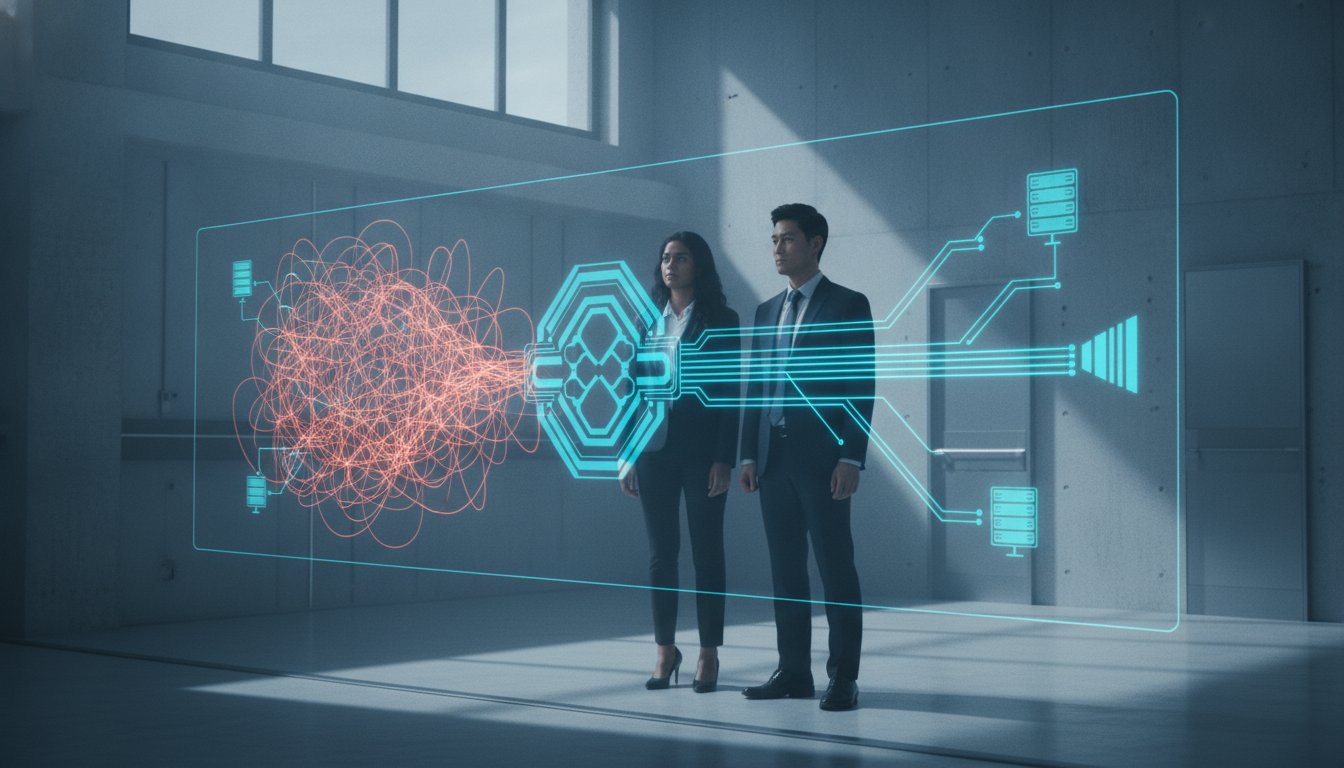
What if the true measure of an automation system's success isn't its current complexity, but its capacity for quiet, effortless evolution? It's a question that strikes at the heart of modern engineering, where the pressure to innovate often leads to architectures that are too rigid to breathe. Many professionals share the quiet anxiety that their current infrastructure is becoming a maintenance burden, or that they're becoming tethered to a single vendor's ecosystem without a clear path forward. You likely recognize the frustration of watching costs climb while control logic remains inefficient. By embracing a more reflective approach to automation system design best practices, it's possible to move away from these constraints toward technical harmony.
This article promises a methodical roadmap for building resilient, scalable architectures that prioritize long-term operational flow over short-term fixes. We'll explore the synthesis of technical precision and modular logic, ensuring your system doesn't just function today, but thrives as your business grows. You'll discover how to minimize technical debt while improving performance and reducing downtime, creating a design that can evolve alongside your business goals. This perspective shifts the focus from merely accumulating technology to cultivating a system that supports your long-term vision.
Key Takeaways by Atsu Bedjean
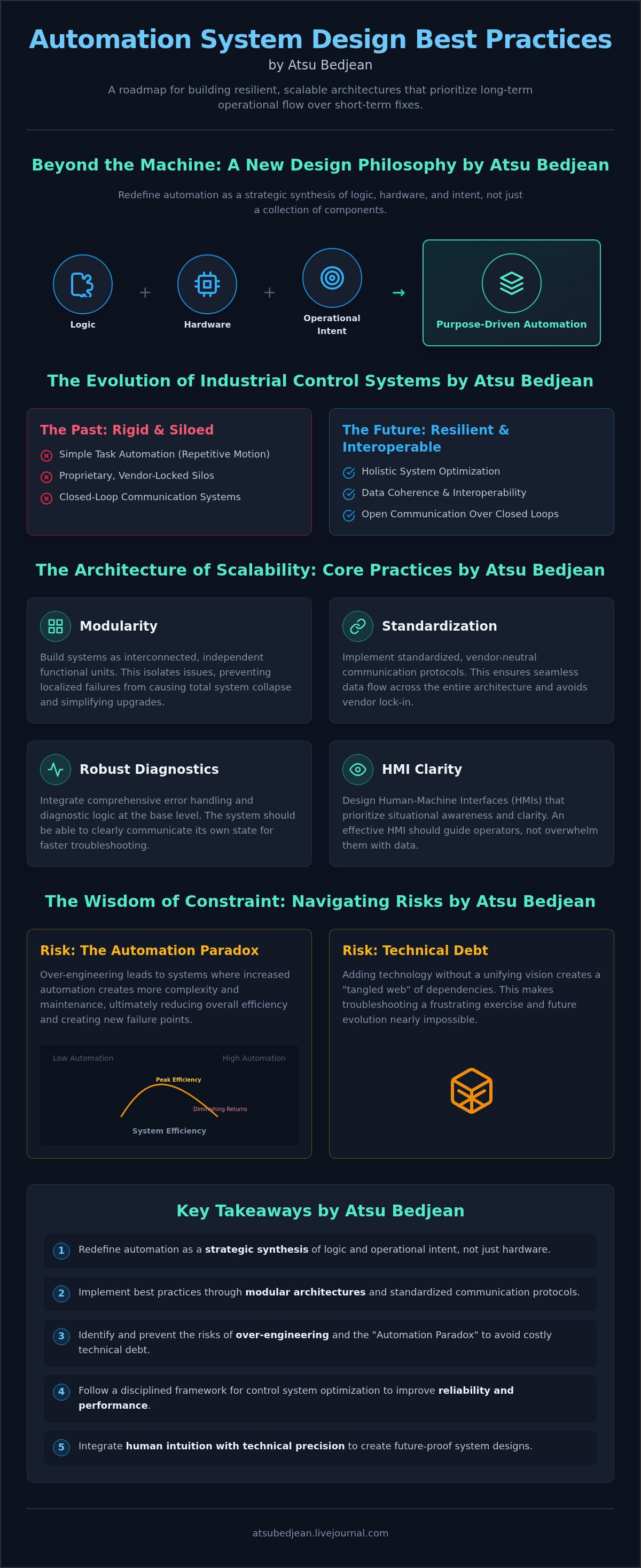
- Learn to redefine automation as a strategic synthesis of logic and operational intent rather than a mere collection of hardware.
- Discover how to implement automation system design best practices through modular architectures and standardized communication protocols.
- Identify the risks of over-engineering and the "Automation Paradox" to prevent the accumulation of costly technical debt.
- Follow a disciplined framework for control system optimization to improve the reliability and performance of existing industrial assets.
- Understand the importance of integrating human intuition with technical precision to create a bespoke, future-proof system design.
Beyond the Machine: Redefining Automation Design Philosophy by Atsu Bedjean
Automation system design is frequently viewed as a purely mechanical exercise, yet it's truly a strategic synthesis of logic, hardware, and operational intent. When we move beyond the machine, we find that automation system design best practices are rooted in a reflective philosophy rather than a mere checklist of components. This mindset prevents the "chaos of complexity" that often plagues industrial settings where technology is added without a unifying vision. Without a reflective pause, systems grow into tangled webs of technical debt where troubleshooting becomes an exercise in frustration. By adopting a contemplative approach, we shift from rigid, monolithic structures to fluid, intelligent architectures that respond to the nuances of production. This is purpose-driven automation, where every sensor and logic gate serves a specific, documented operational goal.
The Interplay of Logic and Intuition
The most effective systems aren't those that blindly follow a script, but those that mirror the human capacity for adaptive problem-solving. While logic provides the foundation, intuition allows for the flexibility needed in a dynamic environment. As a design engineer, the role is to act as a bridge between cold technical requirements and the creative execution required to solve unique industrial challenges. This synthesis ensures that the logic doesn't just work in a vacuum but supports the people who interact with it daily. Intelligent system architecture is a purposeful balance of structural rigidity and operational adaptability.
The Evolution of Industrial Control Systems
Current industry standards for modular automation in 2026 prioritize data coherence and interoperability over the proprietary silos of the past. We've moved beyond simple task automation, where a machine merely repeats a motion, toward holistic system optimization. This evolution requires a deep understanding of automation system design best practices to ensure that every layer of the control system communicates effectively. Modern designs must favor open communication over closed loops to remain resilient. It sets a stage where technical precision meets long-term operational flow, paving the way for the methodical engineering principles that follow. By focusing on the "why" behind the logic, we create systems that are built to last and ready to evolve.
The Architecture of Scalability: Core Engineering Best Practices by Atsu Bedjean
Scalability in industrial environments is frequently mistaken for a quantitative increase in hardware. However, a truly resilient system relies on a qualitative approach to its underlying structure. Adhering to automation system design best practices involves creating a framework that welcomes expansion without sacrificing stability. It's about ensuring that the logic governing the system is as flexible as the business it serves. By prioritizing modularity, we treat each functional unit as an independent entity that contributes to a larger, harmonious whole. This methodical approach ensures that as your needs grow, your architecture remains a source of strength rather than a burden of technical debt.
To achieve this balance, we must focus on several foundational pillars:
- Building systems as a series of interconnected, independent functional units to ensure that localized issues don't lead to total system failure.
- Standardizing communication protocols across the entire architecture to facilitate a seamless data flow that is vendor-neutral.
- Implementing robust error handling and diagnostic logic at the base level, allowing the system to communicate its own state clearly.
- Designing Human-Machine Interfaces (HMIs) that prioritize situational awareness and clarity over mere data density.
A well-designed architecture acts as a living map, guiding operators through complex processes with ease. When you're ready to refine these elements within your own facility, engaging with bespoke industrial architecture consulting can provide the clarity needed to avoid common design errors. It's about building a system that doesn't just work, but thrives under the pressure of evolution.
Modular Design Patterns
Decoupled systems are the cornerstone of modern maintenance. By designing "plug-and-play" modules, we allow for future upgrades without the need for a complete system overhaul. This isolation ensures that a failure in one area doesn't ripple through the entire plant, preserving uptime and reducing the stress on maintenance teams. It's a shift from rigid, fragile structures to a more fluid, modular reality that respects the need for long-term operational flow.
Data Integrity and Flow
Reliable sensor data acquisition is the first step toward meaningful optimization. We must implement noise reduction techniques and ensure low-latency communication between PLC logic and supervisory systems to maintain real-time accuracy. Data contextualization and precise timestamping are equally important; they transform raw numbers into a narrative that informs future decisions. Without this integrity, even the most sophisticated logic is built on a foundation of uncertainty, making it impossible to achieve true system optimization.
The Wisdom of Constraint: Navigating the Risks of Over-Automation by Atsu Bedjean
In the pursuit of industrial excellence, there's a tempting urge to automate every conceivable variable. However, we often encounter the "Automation Paradox," where increasing complexity actually leads to decreased reliability. When a system becomes too intricate, it loses the transparency required for effective human intervention. True automation system design best practices suggest that the most elegant solution isn't the one with the most features, but the one that achieves the objective with the least amount of friction. Over-engineered systems carry heavy hidden costs, including bloated maintenance schedules, specialized training requirements, and agonizing troubleshooting delays that erode the very efficiency they were meant to create. Efficiency shouldn't come at the cost of understanding.
We must also consider the weight of technical debt. This is the long-term price paid for choosing "easy" shortcuts or overly complex "black box" solutions over a robust, right-first-time architecture. It's often better to adopt a "minimum viable automation" approach, scaling your logic only when the return on investment is clearly defined and the operational benefits are undeniable. This disciplined framework ensures that every layer of technology added to the facility serves a verified purpose, maintaining a clean and manageable operational flow.
Identifying the Signs of Over-Automation
How do you know if your system has crossed the line into excess? Symptoms often include frequent "ghost" alarms that operators eventually ignore, or a precarious reliance on a single expert who holds the only map to the logic. If your workflows are so rigid that they can't handle minor process variations without a complete code rewrite, it's time for a complexity audit. Maintaining critical manual overrides isn't a step backward; it's a sophisticated acknowledgement that human intuition remains a vital safeguard. A system that can't be manually managed in an emergency is a system that isn't truly under control.
Minizing Technical Debt
Technical debt often hides within proprietary vendor lock-in or non-standard coding practices that make future modifications nearly impossible. Documentation shouldn't be a post-project afterthought; it's a core engineering requirement that ensures the system's "why" is as clear as its "how." Building a "future-proof" system means creating something that any qualified engineer can understand and maintain. This vendor-neutral perspective is essential for long-term health, allowing your infrastructure to evolve without being tethered to a single provider's roadmap. By prioritizing standardized logic today, you're protecting the business's ability to innovate tomorrow.
A Disciplined Framework for Control System Optimization by Atsu Bedjean
Optimization is not a final destination; it's a continuous conversation between the logic of the machine and the practical needs of the process. While previous sections explored the philosophy of restraint, this framework provides the methodical rigor needed to translate that wisdom into measurable performance. By following a disciplined framework, we ensure that automation system design best practices are integrated into the daily rhythm of the facility. This approach moves away from reactive firefighting toward a state of steady, predictable growth where technology supports human intent rather than obscuring it.
- Step 1: Establish a baseline of current system performance through detailed bottleneck analysis, identifying exactly where the logic or hardware creates friction.
- Step 2: Refine control loop logic to minimize oscillation and maximize stability, ensuring the system operates within its most efficient parameters.
- Step 3: Implement predictive maintenance triggers based on real-time data trends, allowing for intervention before a failure occurs.
- Step 4: Conduct regular architecture reviews to identify emerging inefficiencies as production demands shift.
- Step 5: Iterate based on operational feedback and changing production demands, closing the loop between engineering design and floor reality.
If you're looking to enhance your existing infrastructure, you can explore professional control system optimization services to bridge the gap between current performance and future potential. This synthesis of technical precision and operational awareness is what defines a truly resilient architecture.
Refining the Logic
The heart of any optimized system lies in the art of tuning PID loops for precision and response speed. It's a delicate balance; a loop that is too aggressive causes wear, while one that is too sluggish permits inefficiency. We must also optimize PLC scan times and memory management, particularly for high-speed applications where every millisecond counts. Simplifying ladder logic or structured text isn't just about aesthetics. It's about improving readability and execution speed, ensuring that the next engineer can understand the system's intent without a struggle.
Operational Continuity
Designing for uptime requires a thoughtful integration of redundancy strategies and fail-safe states that protect both the equipment and the process. We aim to reduce the "Mean Time to Repair" (MTTR) through intuitive system feedback that points directly to the root cause of an issue. This level of clarity is essential for extending the lifecycle of legacy industrial assets. By applying modern optimization techniques to older systems, we can breathe new life into existing infrastructure, proving that automation system design best practices are as much about stewardship as they are about innovation.
Strategic Synthesis: Integrating Human Intuition with Technical Precision by Atsu Bedjean
We often view automation as a tool for replacement, yet its true potential lies in its role as an extension of human capability. A system shouldn't silence the intuition of the operator; it should amplify it. By integrating technical precision with the nuanced understanding of those on the floor, we create an architecture that feels like a natural part of the facility. This is the essence of bespoke design, where automation system design best practices are used to tailor a solution to the specific "soul" of an operation. Every facility has a unique rhythm, and the logic governing its machines must respect that cadence to be truly effective.
Atsu Bedjean provides the independent, high-level engineering expertise required to facilitate this synthesis. Without the pressure to sell specific hardware, the focus remains entirely on the integrity of the architecture. It's a partnership approach that views system evolution as a shared journey rather than a one-time transaction. When the design reflects the operational intent so clearly, the transition from manual processes to automated ones feels less like a disruption and more like a logical progression. This clarity ensures that the technical precision of the build never loses sight of the human intuition that drives the business forward.
The Value of Independent Consulting
Vendor-neutral advice is the only way to avoid a biased architecture that serves the manufacturer more than the user. As a guide through the transition from manual to automated workflows, a consultant helps you maintain perspective. It's easy to get lost in the "how" of a new installation, but we must always return to the "why." Why is this sensor here? Why does this logic gate trigger now? Focusing on the underlying purpose ensures that the resulting system remains efficient and accessible for years to come. It prevents the accumulation of unnecessary features that don't contribute to the core mission.
Designing for the Future
Beginning a consultation for system design or optimization starts with a shared exploration of your current challenges and future goals. Intelligent architecture has a profound impact on long-term business growth, providing the stability needed to innovate without fear of system collapse. By choosing to explore professional automation system design with Atsu Bedjean, you're investing in a roadmap that prioritizes clarity, resilience, and operational flow. The goal isn't just to build a machine that works, but to cultivate a system that grows alongside your vision, ensuring that your technical foundation is as ambitious as your business objectives.
Cultivating a Resilient Architectural Legacy by Atsu Bedjean
Building a system that stands the test of time requires more than just high-end hardware; it demands a shift toward a more reflective and modular philosophy. We've explored how a disciplined framework for optimization and a healthy respect for the risks of over-automation can transform a rigid facility into a fluid, intelligent environment. By prioritizing the "why" behind every logic gate, you ensure that your technical foundation remains an asset rather than a source of maintenance debt. Adopting automation system design best practices is the first step toward achieving this essential balance of precision and adaptability.
If you're ready to move beyond generic solutions, you can consult with Atsu Bedjean for bespoke automation system design and optimization. With a focus on independent, vendor-neutral engineering expertise, he specializes in reducing technical debt while building scalable architectures that improve long-term reliability. It's an opportunity to align your control logic with the true operational intent of your business. Your path toward a more harmonious and efficient production flow begins with a single, thoughtful decision to prioritize architectural integrity. Let's build something that evolves as gracefully as it performs.
Frequently Asked Questions by Atsu Bedjean
What is the most common mistake in automation system design?
The most frequent error is the creation of rigid, monolithic architectures that lack the flexibility to adapt to future process changes. Designers often prioritize immediate functionality over long-term maintainability, resulting in a system that is difficult to troubleshoot. By ignoring automation system design best practices, engineers inadvertently build in technical debt from the start. This approach leads to fragile systems where a single change can trigger a ripple effect of failures across the entire production line.
How do I know if my industrial system is over-automated?
You can identify an over-automated system when the complexity of the control logic begins to hinder rather than help human operators. Common symptoms include a high frequency of "ghost" alarms that are routinely ignored or a total reliance on a single expert to manage the code. If your workflows are so rigid that they can't accommodate minor variations without a complete rewrite, the system has likely crossed the line into excess. True efficiency requires a balance between logic and human intuition.
What are the benefits of a vendor-neutral automation consultant?
A vendor-neutral consultant provides an objective perspective that isn't tied to the sale of specific hardware or proprietary software ecosystems. This independence allows for the creation of an architecture based solely on your operational needs rather than a manufacturer's sales targets. By focusing on open standards and interoperability, a consultant ensures that your system remains flexible. It prevents the costly trap of vendor lock-in, where you're forced to rely on one provider for all future upgrades and support.
How does control system optimization differ from a full system redesign?
Control system optimization focuses on refining and improving your existing infrastructure to maximize performance without a total hardware overhaul. It involves analyzing bottlenecks, tuning PID loops, and simplifying logic to improve execution speed. In contrast, a full system redesign involves building a new architecture from the ground up. Optimization is often a more cost-effective way to extend the lifecycle of legacy assets while still achieving significant improvements in reliability and production flow without the disruption of a total replacement.
What is technical debt in the context of industrial automation?
Technical debt refers to the long-term operational costs incurred when you choose "easy" short-term fixes over robust, scalable engineering solutions. In automation, this often manifests as poorly documented code, non-standard protocols, or proprietary logic that is difficult for other engineers to maintain. Over time, this debt accumulates interest in the form of increased downtime and higher maintenance fees. Following automation system design best practices helps minimize this burden by prioritizing clean, modular, and well-documented architectural patterns from the outset.
How often should an automation system architecture be reviewed?
It's advisable to conduct a comprehensive architecture review at least once every twelve to eighteen months or whenever significant process changes occur. These reviews help identify emerging inefficiencies and ensure that your logic still aligns with current business goals. Regular audits also allow you to integrate updated industry standards, such as the modular 2026 protocols, which prioritize data coherence. Staying proactive prevents technical debt from accumulating and ensures that your system remains resilient as production demands continue to evolve.
Can legacy control systems be optimized without a total hardware replacement?
Yes, many legacy systems can be significantly improved through targeted logic refinement and data contextualization without replacing the underlying hardware. By establishing a performance baseline and identifying specific logic bottlenecks, you can tune existing loops for better precision. This approach breathes new life into older assets, improving their stability and response speed. It's a methodical way to modernize your operations while respecting the value of your existing investments and avoiding the high costs of a full-scale hardware replacement.
What role does modularity play in reducing system downtime?
Modularity reduces downtime by isolating functional units so that a failure in one area doesn't cascade through the entire system. When an architecture is built as a series of independent modules, maintenance teams can troubleshoot or replace specific components without halting the entire production line. This "plug-and-play" approach simplifies repairs and allows for faster diagnostic feedback. By decoupling logic, you create a more resilient environment where the system can continue to function even during localized maintenance or future hardware upgrades.